
Hong Kong’s transitional housing: The homes built to move
Posted on: 2026-07-28
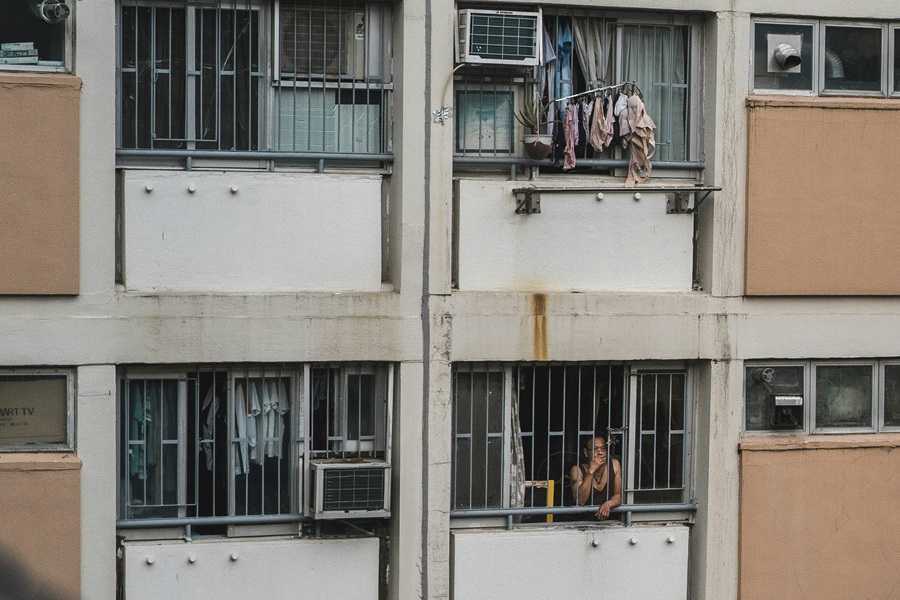
Made an Honorary Fellow at the University of the Built Environment’s Summer 2026 Graduation, Hong Kong building professional and former student Cr Sr Tang Chi Wang spoke to us about how Hong Kong is using relocatable modular homes to ease the pressure of soaring rents, overcrowded accommodation and long waits for permanent housing.
By Linda Serck
Hong Kong announces itself vertically. Towers climb the green hillsides, windows repeat in tall monolithic grids, and glimpses of the harbour shimmer between tightly packed high-rise buildings. In this densely populated, land-poor city with a famous skyscraper skyline, we also encounter long waiting lists, punishing property prices and homes scarcely larger than the beds they contain.
A city priced by the square metre
It is an issue close to Cr Sr Tang Chi Wang, Founder and Executive Director of ADWISE Building Consultancy Limited and University of the Built Environment alumnus.
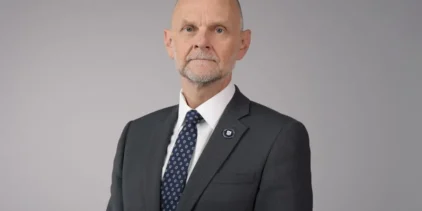
“Housing is a long-term problem in Hong Kong,” he said, speaking in his Honorary Fellow robes at the graduation ceremony in Reading, England. “There are many people, but housing prices are so high. Not many people can afford to buy a house or an apartment.”
His comment tallies with the Hong Kong Government’s Rating and Valuation Department July 2026 report: the average square-metre price in May for a small private apartment indicates a 35-square-metre flat – roughly the floor area of three car-parking spaces – would cost around HK$5.2 million (about £496,000), HK$4.9 million (about £467,000) or HK$4.4 million (about £419,000) respectively. Average monthly rents for the same floor area would be about HK$18,445 (about £1,760), HK$15,820 (about £1,510) and HK$12,810 (about £1,220).

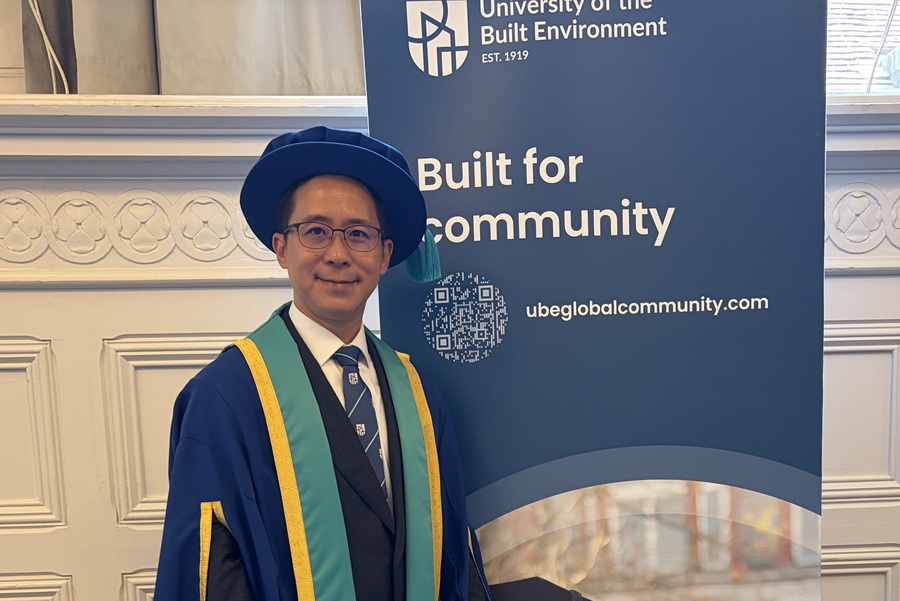
For those on low incomes, the alternative may be a subdivided flat, created by dividing an apartment into several dwellings. In 2025, Hong Kong had around 110,000 such units, housing 220,000 people.
According to the Government’s Housing Bureau and Planning Department, some of these subdivided flats are less than eight square metres – that’s less than one car-parking space – with a median monthly rent of HK$5,000 (about £476).
“Some people cannot afford to buy private housing, so they have to live in a subdivided flat,” Tang said. “Maybe only 10 square metres has to house three or four people.”
Hong Kong’s Basic Housing Unit regime, introduced in March 2026, recognises the serious health and safety risks of living in such confined and sometimes low-quality conditions, and has set minimum requirements covering size, height, structural and fire safety, sanitation, water, electricity and ventilation. However, these rules don’t come into force until March 2027.
Modular Integrated Construction
Against this backdrop of prohibitively expensive rents, limited living space, and years spent waiting for a permanent home, transitional housing has emerged as an increasingly important stopgap.
“In recent years, the Government has been proactive in trying to solve the problem,” Tang says. “People can go into transitional housing temporarily and pay a very low rent.”
The term describes temporary, affordable rental accommodation, much of which consists of modular homes constructed using Modular Integrated Construction (MiC) on temporarily available land, and are generally operated by non-profit organisations with government support.
Hong Kong’s present transitional housing system has grown in stages. The social enterprise Light Be launched an early scheme in 2012, and the Government began supporting transitional housing in 2015. The Community Housing Movement followed in 2017, a government task force in 2018 and a dedicated funding scheme for NGO-led projects in 2020. The latter was eventually expanded to HK$11.6 billion, with a target of 20,000 homes. By the end of April 2026, more than 21,150 transitional homes had entered service, exceeding that target.
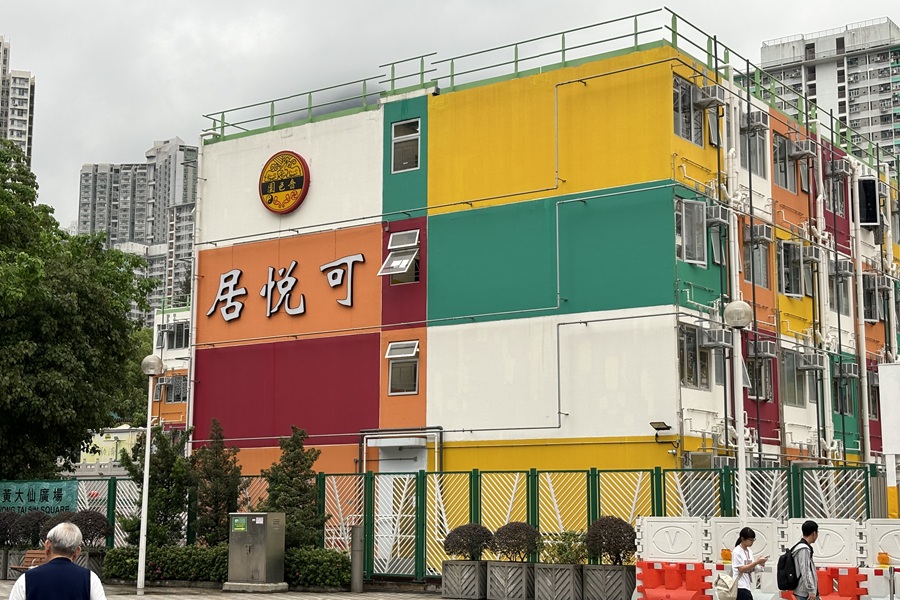
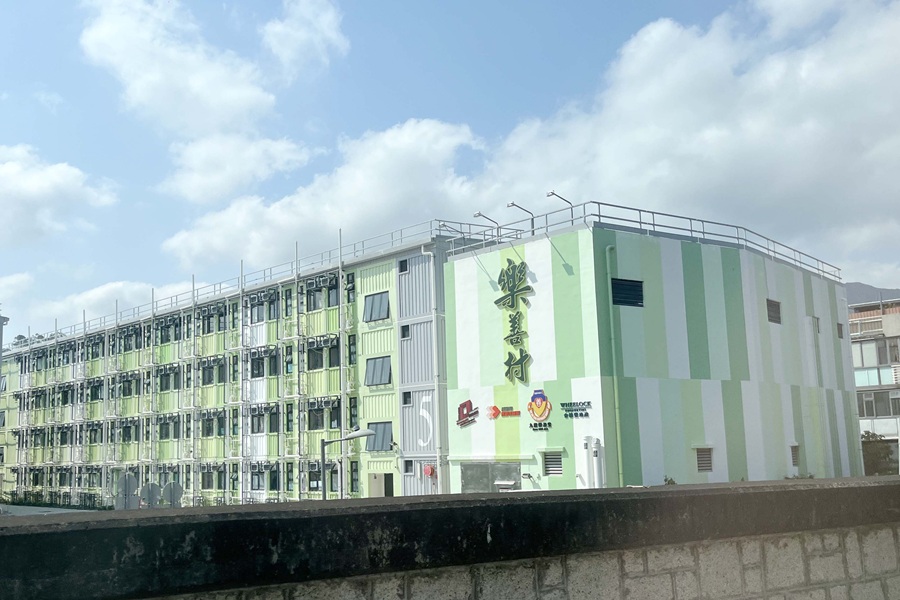
While transitional housing can span vacant flats, converted schools and other non-residential buildings, MiC is the part that most interests Tang. Room-sized modules, complete with finishes, fittings and services, are largely manufactured away from the site, then transported, stacked and connected. Examples include the large-scale Lok Sin Village in Tai Po that houses 1,236 units (pictured above) and the colourful 227-unit Ho Yuet Home project in Kowloon (main image).
“They are constructed by MiC,” he explains. “They can be taken down and rebuilt on another site. Like Lego, one by one.”
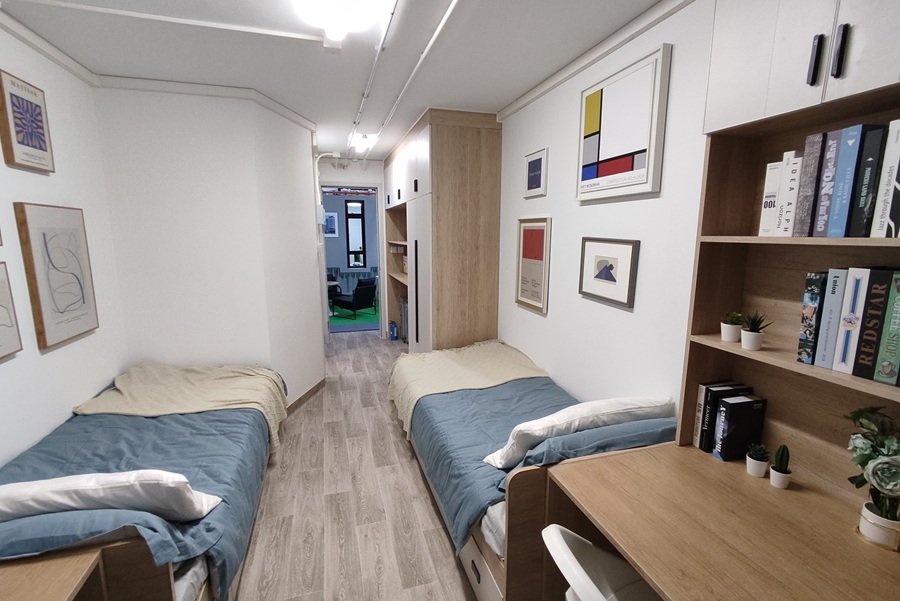
Transitional housing takes advantage of a plot of land being undeveloped for several years before any permanent building work begins. Rather than leave it fenced and idle, an NGO can operate temporary homes there, often with government construction funding. Planning arrangements allow qualifying transitional housing schemes to occupy certain sites temporarily for five years or less. When the land is required, modules designed for disassembly can be moved.
“Different sites have different zoning,” Tang says. “Some are for residential use, some for offices and some for government, institutional or community use. A site may not be planned for housing permanently, but policy can allow it to be used temporarily to help solve the housing problem.
“After five years, they may review the land use, dismantle the MiC units and construct them on another site.”
Other benefits include the rent varying according to tenants’ circumstances rather than being charged at a single fixed rate, and assembly to a resident moving in can take less than a year. Also, larger developments like United Court in Yuen Long has place-making features including a playground, fitness facilities, communal laundry and small shop. Finally, eligibility has traditionally prioritised people waiting at least three years for public rental housing, although the rules now allow places to be allocated to other households with pressing needs.
“It is a good idea, at least to solve a temporary problem,” Tang said.
Build smarter, not higher
Hong Kong is not alone in exploring relocatable modular housing. Variations of the model are already being used in countries including New Zealand, the Netherlands and the UK, although the purpose, scale and systems of support differ.
What distinguishes Hong Kong’s approach is how it has been applied within its extreme land constraints and offers a lesson for other crowded cities. For a city with a default of building upwards, transitional housing introduces another possibility. Rather than build higher, a city can build faster, use land more intelligently and allow the homes themselves to move.
Explore University of the Built Environment’s flexible built environment courses available to students in Hong Kong, including programmes in construction, real estate, surveying and urban planning:
Click here to search our programmes
************************************************
Tang Chi Wang
BSc(Hons), LLB(Hons), MPA, DipArb, FHKIS, MRICS, FHKICM, MCIOB, FCABE, MHIREA, LEED AP, BEAM PRO, FCIArb, FHKIArb, ACCREDITED MEDIATOR
is a multi-disciplined professional with over 20 years’ experience in Construction Industry. He has been appointed as expert witness and mediator for a numbers of cases.
Currently, He is the Immediate Past President cum Chairman of Board of Examination of The Hong Kong Institute of Construction Managers, Senior Vice Chairman of Hong Kong Lo Pan Kwong Yuet Tong and Honorary Treasurer of Building Surveying Division of The Hong Kong Institute of Surveyors. Over the years, he has been actively serving the community and construction industry by participating different Boards and Committees. He is the Member of Buildings Appeal Tribunal Panel, Member of Construction Workers Registration Appeal Board Panel, Member of Building and Civil Engineering Training Board of Vocational Training Council, Member of Advisory Committee of Civil and Environmental Engineering of Hong Kong Polytechnic University, Member of Immigration Tribunal, Member of Registration of Persons Tribunal, Member of Obscene and Indecent Articles Panel of Adjudicators, Member of Private Columbaria Appeal Board and Member of Independent Police Complaints Council Observers Scheme.
In the past, He was the President of Hong Kong Mediation Centre and Director of Joint Mediation Helpline Office. He was the member of Organizing Committee of Quality Building Award 2012, 2014, 2016 and 2020, the Chairman of Jury Sub-Committee of Quality Building Award 2016 and the Jury of Quality Building Award 2018.
Why some Hong Kongers live in homes smaller than a parking space, by the numbers | AP News
news.gov.hk – Basic housing regime takes effect
 EN
EN  ZH
ZH