
Beyond the blueprint: A day in the life of a Town Planner
張貼於: 2026-11-21
Who helps shape the places where we live, work and connect? Behind the community is the work of town planners, balancing development, transport and environmental priorities to create places that meet the needs of today while preparing for the challenges of tomorrow.
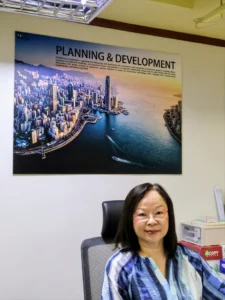
Helen Lung (MSc in Urban Planning, MSc in Real Estate, HKIP, RTPI, RICS), Associate Director – Planning and Development, of Prudential Surveyors (Hong Kong) Ltd, shares what a typical day of a Town Planner looks like, along with the skills and experiences needed to succeed in the profession, revealing that town planning is about much more than just blueprints.
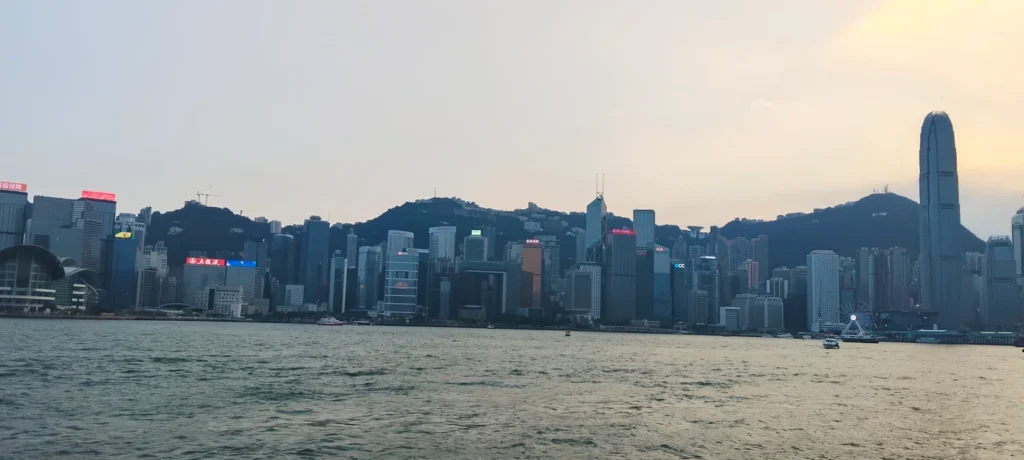
More than maps and masterplans
Walking along the harbourfront in the golden morning light, with the sea breeze cutting through the humidity, I am reminded that our work is not about buildings alone, but about the people and communities they serve.
I am a town planner, and this morning stroll is where the day’s thinking often begins.
The job is easily misunderstood. It is not merely about drawing lines on a map or approving building permits. Much of it happens away from the drawing board—out in the field, in meeting rooms, in conversations with the people who will actually live and work in the places we shape.
Knowing a place first
My first task of the day is a site reconnaissance visit, carrying out a walkover survey to assess site conditions. I am looking at a strip of land earmarked for a mixed-use development. Before I can think about zoning regulations, I have to feel the site. I study the location and characteristics of the area. Where does the sun hit at noon? How strong are the wind tunnels created by the existing buildings? Where do pedestrians come from, and where do they go? I note the texture of the pavement, the health of the nearby trees, the noise from the adjacent highway. These details matter as much as the data. Identifying the constraints, such as a hidden drainage easement or an old, valuable tree that must be preserved, is the first step in unlocking the site’s potential.
Designing solutions that work for everyone
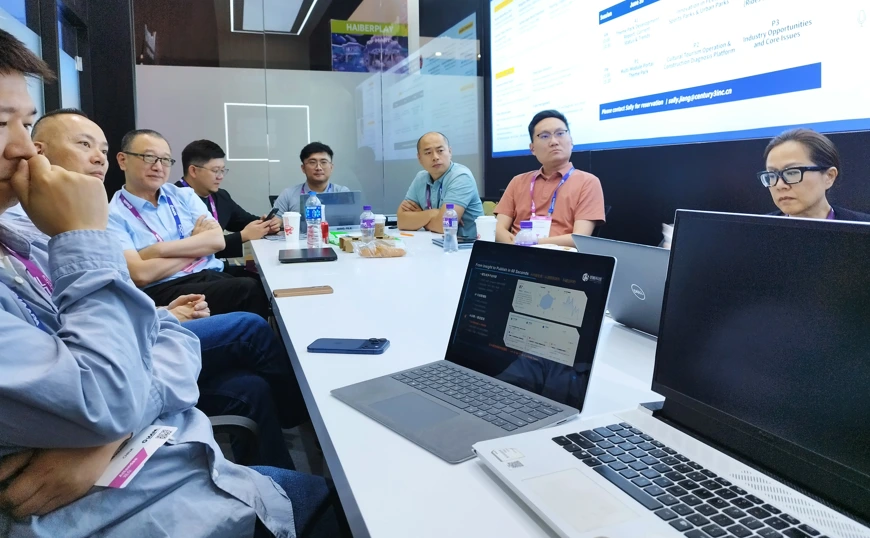
By mid-morning, I am back in the workplace, immersed in the energy of collaboration. Today we are meeting the client—a developer hoping to build a community hub. It is a juggling act. The client wants a viable scheme; I want a place that works for the people who will use it. My role is to bridge that gap, showing that good design and community focus are not obstacles to a sound project but part of what makes it last.
“You want people to linger here,” I explain, pointing to a map of pedestrian movement. “If we create a plaza that connects to the waterfront, the shops behind it will thrive. We are not just building apartments; we are building a neighbourhood.”
Planning through teamwork
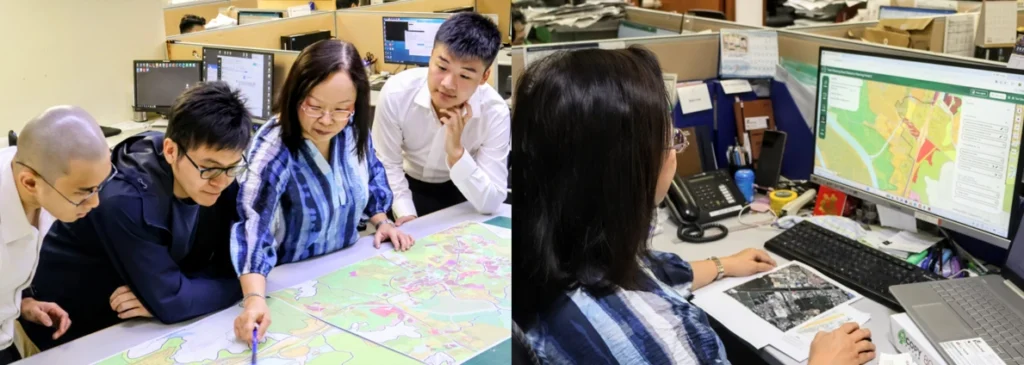
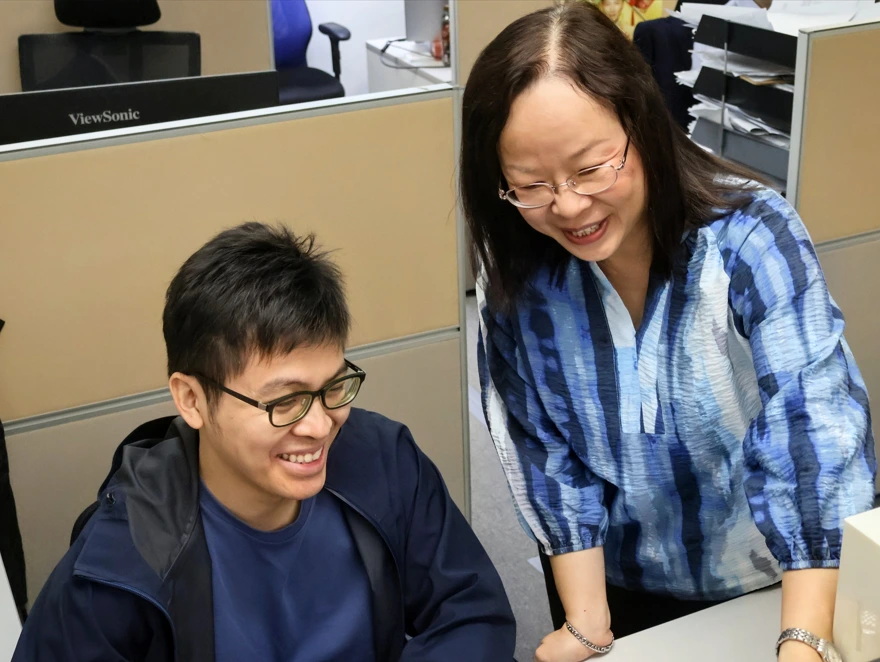
The afternoon is spent working with the team to deliver outputs. Planning is a team sport. I sit with our Geographic Information System (GIS) specialists, transport engineers and environmental consultants. We debate, sketch and revise. We run models to make sure the new development does not flood the surrounding streets or block important view corridors. The work is slow and detailed, and the results are rarely visible overnight.
Supporting the next generation
One of the more rewarding parts of the day comes late in the afternoon: coaching younger staff. I sit with a junior planner struggling with a statutory report. I remember being in their shoes—overwhelmed by the volume of legislation and policy. I walk them through the logic, helping them see why a policy exists, not just what it says.
Beyond projects and plans
As the sun begins to set over the harbour, I look out once more. The city is changing—growing, densifying, evolving. But the satisfaction is real: the knowledge and experience we work is not confined to papers and drawings, but quietly improves how people live, work, rest and play—today and for the generations who will inherit this place.
If you are a prospective student drawn to geography, design, sociology, policy and streams related to the built environment, town planning offers a way to shape the world we live in. It asks for logic and creativity in equal measure, and it rewards patience. The results may take years to appear, but when they do, they are there for everyone to see—and to live in.
And the context for this work has never been larger. The city has set out with a vision to plan and develop the Northern Metropolis—covering about one-third of Hong Kong’s total land area and planned as home to some 2.5 million people, with new jobs to match. It is a long-term endeavour still taking shape, and it is precisely where town planners have a role to play: turning a grand vision into liveable development areas, workable transport and places where people can build their lives. For those keen to be involved, the opportunities are open.
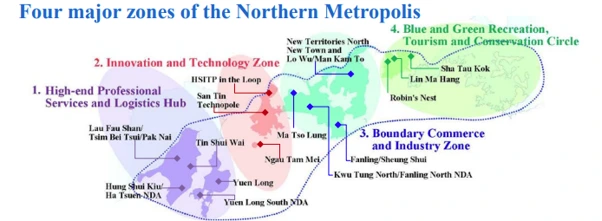
Source: HKSARG
Inspired to become a Planner?
Find out more about the University of the Built Environment’s 城市規劃學理碩士.
Join our online CPD on the topic of AI and data-led planning on 26 November 2026.


 ZH
 EN