
The leadership challenge nobody wants: Managing growth in a labour-constrained Hong Kong
張貼於: 2026-09-24
 By Dr Claire Hookham
Head of Business and Law, University of the Built Environment
When organisations discuss growth, conversations often focus on new markets, innovation, technology, and investment. Yet one of the biggest barriers to growth facing Hong Kong today is far more fundamental: people.
Recent government projections indicate that Hong Kong could face a workforce capacity shortage of approximately 180,000 workers by 2028, driven by an ageing population, increasing demand for skills, and continued economic development. Significant shortages are expected across construction, engineering, technology, and other skilled occupations critical to the city’s future development.
For professionals working in the built environment, this is not simply an HR issue. It is a strategic leadership challenge.
The talent crunch behind Hong Kong’s growth ambitions
Hong Kong is entering a period of ambitious development. Major infrastructure projects, the Northern Metropolis, sustainability initiatives, and continued integration within the Greater Bay Area all rely on access to skilled labour.
However, the workforce required to deliver these ambitions is becoming increasingly difficult to secure. Government forecasts suggest that construction alone could experience a shortfall of between 45,000 and 55,000 workers, while shortages of skilled technical professionals are expected to exceed 60,000 across the economy.
This creates a dilemma for leaders. How do organisations continue to grow when the very people needed to deliver that growth are in short supply? The answer lies in leadership rather than recruitment alone.
Workforce planning becomes a strategic priority
For many years, workforce planning was viewed as an operational activity. Today, it has become a boardroom issue.
Leaders must think beyond filling immediate vacancies and instead consider how their organisations will access, develop, and retain the skills they need over the next decade. Government projections highlight growing demand for expertise in digital operations, artificial intelligence, data analysis, engineering, and technical trades as business models continue to evolve.
This means leaders need to focus on succession planning, talent development, reskilling, and organisational capability. Businesses that depend solely on hiring from an increasingly constrained labour market may struggle to compete.
Increasingly, competitive advantage will come from developing people rather than simply attracting them.
Leading under constraints
One of the defining characteristics of leadership is the ability to deliver results despite limitations.
Labour shortages add a new layer of complexity. Leaders must balance rising workloads, project deadlines, employee wellbeing, and organisational performance, often with fewer resources than they would ideally like.
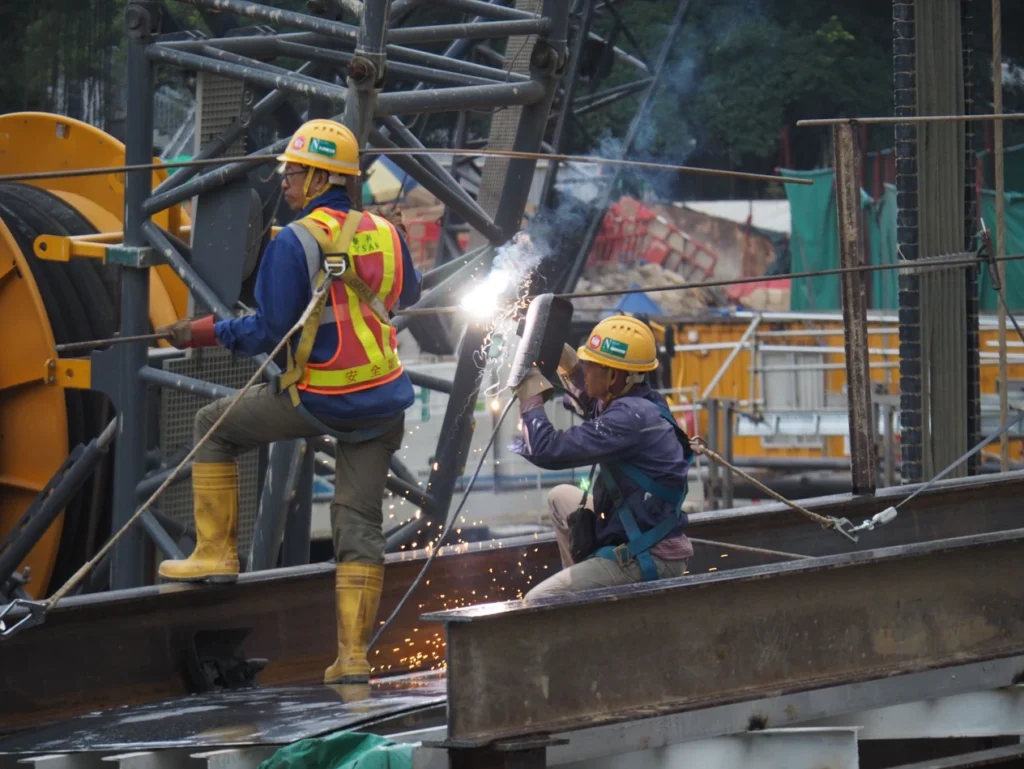
In the built environment sector, where large-scale projects depend on specialist expertise, these pressures can be particularly acute. Construction, engineering, surveying, and infrastructure companies frequently compete for the same talent pool while facing growing client expectations and delivery demands.
As a result, leadership becomes less about managing headcount and more about maximising capability, productivity, and engagement.
Technology is not the entire solution
Technology will undoubtedly play a critical role in addressing labour shortages.
Automation, artificial intelligence, digital twins, modern methods of construction, and data-driven project management all have the potential to improve efficiency and reduce dependence on scarce labour resources.
However, technology alone will not solve a talent crisis.
Successful companies also need leaders who can motivate people, manage change, build effective teams, and create cultures where talented individuals want to stay. Labour shortages are ultimately a people challenge, and people challenges require strong leadership.
The future will belong to organisations that combine technological innovation with effective talent management.

Thinking beyond borders
Many companies are already responding through broader talent strategies, including international recruitment and cross-border workforce planning. Hong Kong’s Government has emphasised the importance of both local skills development and the continued attraction of overseas talent to meet future workforce needs.
For leaders, this creates new challenges and opportunities. Managing international teams, leading across cultures, and building effective partnerships will become increasingly important capabilities.
The leaders of tomorrow will need to think not only about projects and operations, but also about talent ecosystems.
What this means for built environment professionals
For professionals across construction, real estate, engineering, infrastructure, and project management, workforce shortages represent a significant strategic challenge.
Technical expertise remains important, but it is no longer sufficient on its own. Future leaders need to understand workforce strategy, organisational behaviour, change management, innovation, and long-term planning. They need the ability to make strategic decisions in environments characterised by uncertainty and resource constraints. These are leadership skills as much as management skills.

The MBA perspective
This is precisely why leadership development has become increasingly important across the built environment sector.
At the University of the Built Environment, our specialist MBA is designed for professionals seeking to progress into senior leadership roles within construction, real estate, infrastructure, and related industries. The programme develops expertise in strategic leadership, management, innovation, finance, and decision-making, while remaining firmly grounded in the realities of the built environment.
Students explore many of the challenges discussed here, including workforce planning, organisational change, digital transformation, talent management, and business growth. Through interaction with an international network of professionals, they develop the skills and confidence needed to lead organisations through increasingly complex environments.
Looking ahead
Labour shortages are often discussed as an operational problem. In reality, they are a leadership challenge. Organisations that succeed in a labour-constrained Hong Kong will not simply be those that recruit more people. They will be those that develop talent, embrace innovation, build capability, and create workplaces where individuals can thrive.
In a market facing a shortage of skilled workers, effective leadership may become the most valuable resource of all. And for professionals aspiring to shape the future of the built environment, there has never been a better time to develop it.



 ZH
ZH  EN
EN